
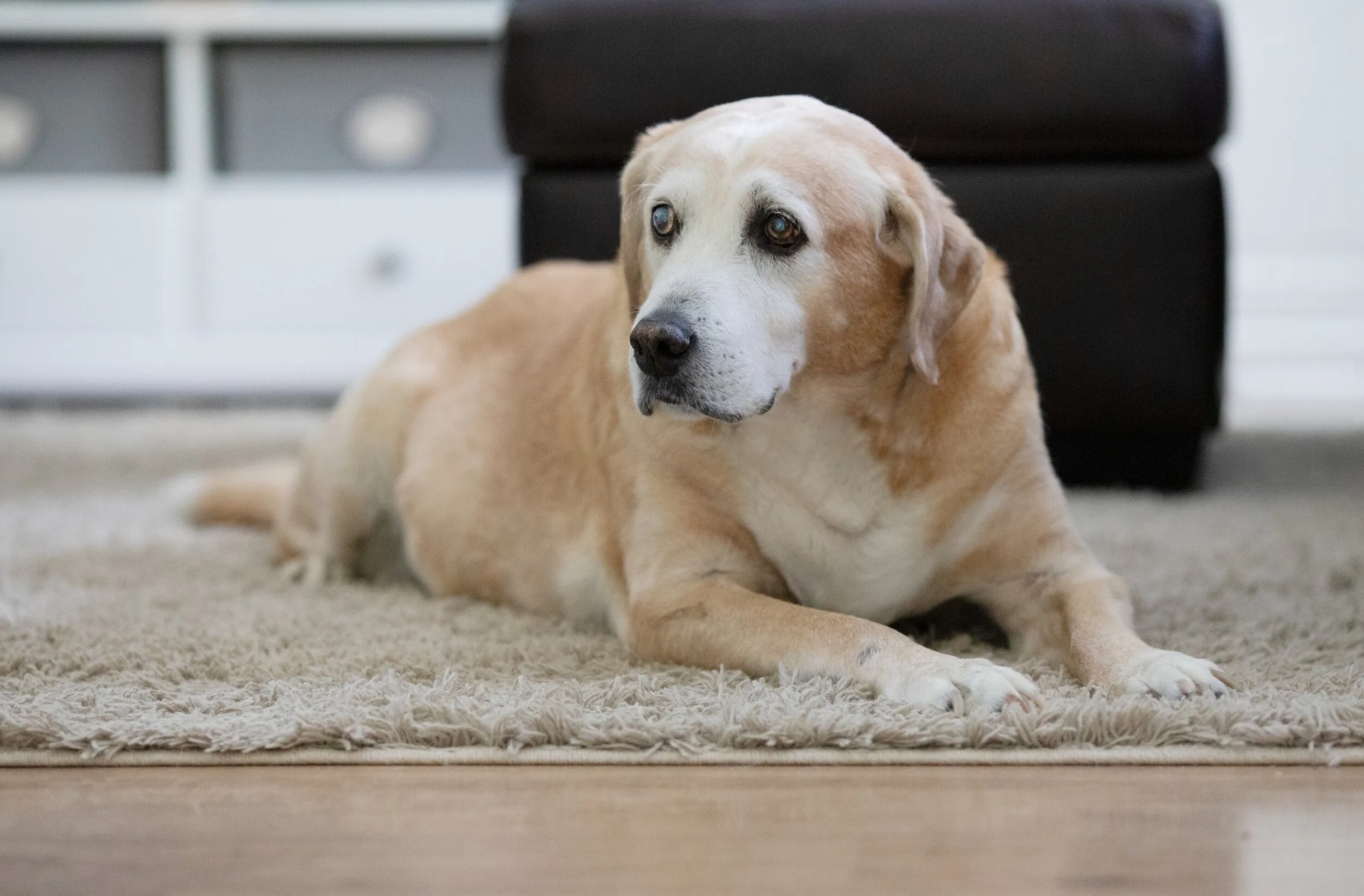
You can tell a dog is in pain from changes more than from crying. Watch for limping or stiffness, panting at rest, restlessness, hiding, a change in appetite or sleep, licking one spot, avoiding touch and trouble going to the bathroom. Dogs hide pain well, so a quiet dog can still be hurting.
If you see these signs, call your regular veterinarian. If your dog’s pain can no longer be controlled, Dr. Amanda Dolian provides in-home pet euthanasia in Frisco so your dog can stay at home.
Why dogs hide pain
Dogs are good at masking pain, a trait from wild ancestors who needed to look strong to survive. That makes pain hard to spot.
Dogs feel pain from many sources: injuries, cancer, arthritis, illness, dental disease and the conditions that come with age.
Signs of pain in dogs
Behavior changes
A normally active, playful dog may become withdrawn, irritable or tired. Some become aggressive, especially when something touches the sore spot.
Limping or a changed walk
A dog with a sore leg puts less weight on it when walking or running. They may limp, favor one leg, or stand stiff or hunched.
Crying out, which is less common than people think
Whimpering, whining, yelping or barking can mean pain, but it’s not as common as many owners expect. A quiet dog can still be in pain.
Dogs cry out most with sudden, sharp pain, like being hit, stepping on something sharp or being bitten. It’s much less common with long-term pain.
Weight loss or gain
A large weight change with no clear cause often points to pain or illness underneath.
Sleep changes
Pain can disrupt sleep. A dog may sleep more, or struggle to find a comfortable position.
Restlessness
Dogs in pain may shift position often, pace or have trouble settling down.
Grooming changes
A dog may lick, chew or groom a painful spot, which can lead to hair loss and sore skin. Some stop grooming because it hurts to.
Appetite changes
Pain can make a dog eat less, refuse food or lose interest in favorite treats.
Avoiding touch
Your dog may flinch, pull away or even growl when you pet them, especially near the sore area.
Bathroom changes
Pain can make it hard to urinate or pass stool. You may see a different posture, straining or crying out while going.
Some dogs find it too painful to get up, so they go while lying down. Some don’t move away from their urine or feces afterward.
Panting
Panting when your dog hasn’t exercised and isn’t hot is a common sign of pain or distress.
Tail held low
A tail held low or tucked between the legs can mean pain or discomfort.
What to do if you think your dog is in pain
Call your veterinarian
Make an appointment with your regular veterinarian as soon as you can. An exam is the way to find the cause and the right treatment. If your dog is in severe pain after hours, go to one of the North Texas emergency pet hospitals.
Don’t give human medicine
Never diagnose or medicate your dog on your own. Some human medicines are toxic to dogs and can make things worse. They can also keep your vet from giving the medicine your dog needs, because of drug interactions.
Keep them comfortable
Set up a quiet, comfortable place to rest until the appointment. Make sure your dog has clean water, and keep track of how much they eat.
Limit activity
Keep your dog’s activity low until the appointment, so the pain or injury doesn’t get worse. After the visit, follow your vet’s limits on exercise.
Keep notes
Write down changes in appetite, behavior and how your dog responds to any medicine. Notes help your vet diagnose the problem and adjust treatment.
Ask about pain control
If your dog has a painful condition, ask your vet about pain control. They may prescribe medicine or suggest other therapies.
When pain can’t be controlled
Sometimes pain can’t be managed, even with the best care. If that’s where your dog is, read when to euthanize a pet and try a quality of life scale. Dr. Dolian also offers a quality of life consultation by phone.
Preventing pain in dogs
Regular checkups
Routine visits with your veterinarian catch health problems early.
A healthy weight
Extra fat adds to the pain of arthritis. Helping an overweight dog reach a healthy weight can ease that pain a lot.
Weight matters for lifespan too. In a lifetime study of Labrador retrievers, lean dogs lived about 2 years longer than overweight dogs.
Dental care
Good dental care prevents painful tooth problems. See Dr. Dolian’s dental tips below.
A safe home
Keep your dog’s surroundings safe to prevent accidents and injuries.
Good food
Feed a balanced diet. Follow the amount on the bag for your dog’s ideal weight, not their current weight.
Adult dogs shouldn’t eat puppy food or an “all life stages” food unless your veterinarian says otherwise.
Exercise
Daily walks keep muscles and joints healthy and help with weight. Match exercise to your dog’s age and breed, and follow any limits from your vet.
Grooming
Regular grooming helps you spot skin problems, fleas and ticks before they cause discomfort.
From Dr. Dolian: dental tips
There are many dental chews on the market. I recommend asking your veterinarian which ones they suggest.
I also recommend staying away from any chew you can’t bend by hand, because hard chews can break teeth.
Ideally, brush your dog’s teeth daily with a dog toothpaste. Human toothpaste can be toxic to dogs. Only brush if you feel it’s safe and your dog won’t bite you.
Pay attention to small changes
Dogs don’t always show pain in obvious ways. Watch for changes in behavior, movement and appetite, and call your veterinarian when something seems off. For cats, read how to tell if your cat is in pain.