
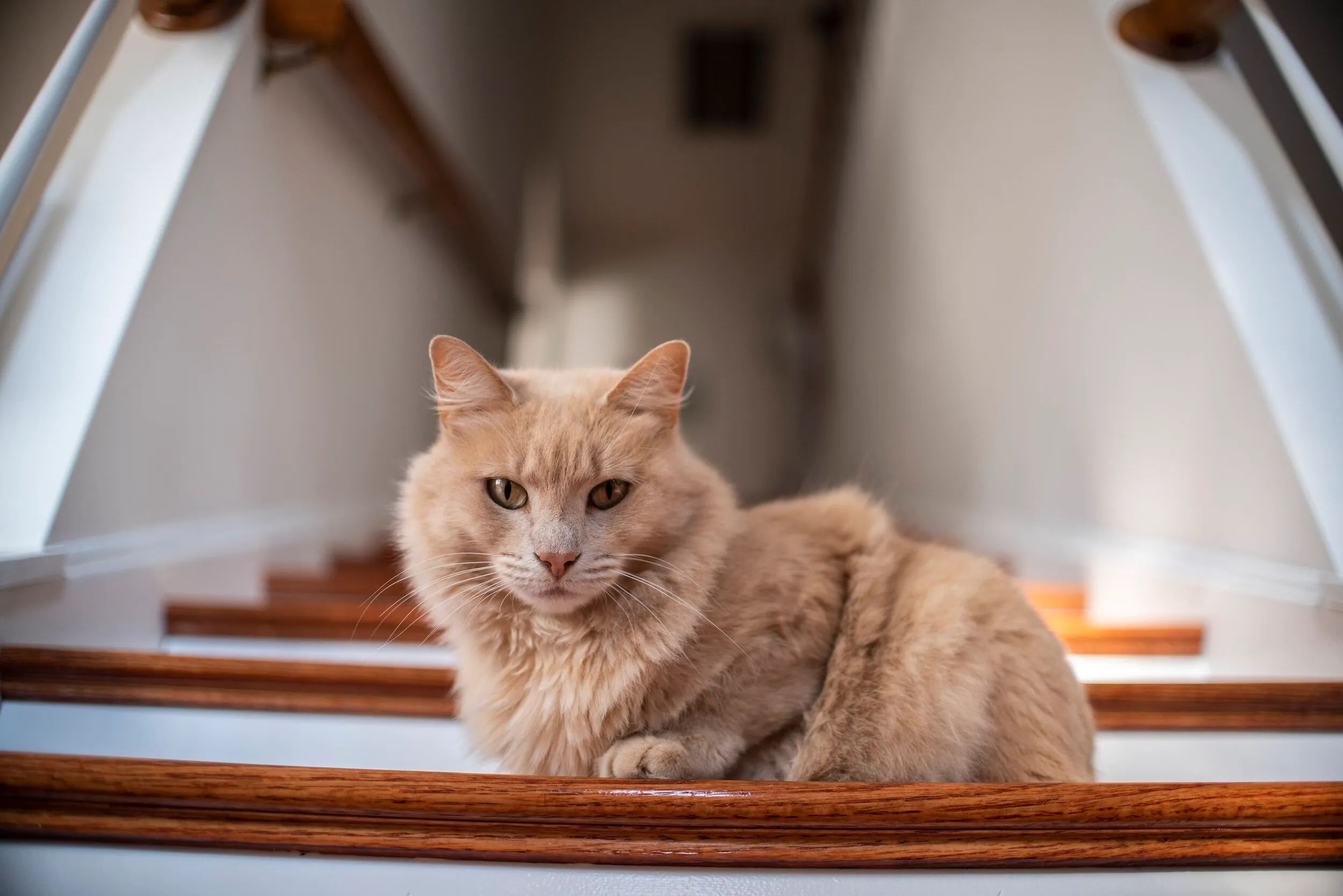
You can tell a cat is in pain mostly from changes in behavior. Watch for hiding, eating less, grooming less or too much, avoiding jumps and going outside the litter box. Cats hide pain by instinct, so the signs are often quiet. Any change that lasts more than a day or two is worth a call to your veterinarian.
This guide covers the common signs, what to do while you wait for an appointment and how to prevent some kinds of pain. When pain can no longer be controlled in an older or very sick cat, Dr. Dolian offers in-home euthanasia for cats and dogs in Frisco, so your cat can stay in a familiar place.
Why cats hide pain
Cats feel pain from injuries, illness, dental disease, arthritis and age. Unlike dogs, cats evolved as solitary hunters. They tend to conceal pain as a survival instinct, even when they are very bonded to you.
Common signs of pain in cats
Behavior changes. This is often the first sign. Watch for irritability, aggression or withdrawal. An affectionate cat may turn aloof or hide more.
Hiding. Cats in pain often seek out closets, the space under furniture or other quiet spots.
Vocalizing. Some cats meow more or make unusual sounds, from soft whimpers to loud yowls.
Less activity. Your cat may play less, stop jumping onto high surfaces or take the stairs slowly. They may skip chasing toys or other things they used to enjoy. The Zoetis osteoarthritis checklist for cats has videos of how arthritis pain changes the way cats move.
Limping or an odd gait. Pain in the legs or joints can cause a limp or a stiff, unusual walk.
Grooming changes. A cat in pain may groom less, leaving a matted or greasy coat and dander. Others groom one sore spot too much, causing hair loss or irritated skin.
Appetite changes. Your cat may eat less, refuse food or have trouble chewing. Some show interest in food but won’t eat it.
Weight loss or gain. Over time, pain can change eating habits enough to shift your cat’s weight.
Litter box changes. A cat with arthritis may hurt climbing into the box and go outside it instead. A cat with a urinary tract infection may start to link the box with pain. Straining in the box can be a sign of pain.
Restlessness. Your cat may pace, keep changing positions or have trouble settling.
Avoiding touch. A cat may hiss, growl, scratch or bite when you pick them up or touch a sore area.
Breathing changes. Rapid breathing without exercise or heat can be a sign of pain. Labored breathing, where you can see the chest or belly muscles working, needs a veterinarian right away.
Signs that need care right away
Some signs are emergencies. Get your cat seen right away if they:
- Strain to urinate
- Breathe with their mouth open
- Breathe with visible effort from the chest or belly
Loving Goodbyes is not an emergency service. If your cat needs urgent care, go to one of the North Texas emergency pet hospitals.
What to do if you think your cat is in pain
See your veterinarian soon. An exam is the only way to find the source of the pain and the right treatment. Take videos of what worries you at home, since many cats hide their symptoms at the clinic.
Don’t give medication on your own. Some human medications are toxic to cats and can make things worse. Ask your veterinarian before giving anything.
Make them comfortable. Until the appointment, give your cat a quiet place to rest with fresh water. Keep track of how much they eat.
Keep stress low. Cut down on loud noises and changes to their routine.
Keep notes. Write down changes in appetite, behavior and how social your cat is. If your cat starts a medication, note whether it seems to help. Videos from before and after starting an arthritis medication make the comparison easier.
Ask about pain management. If your cat has a painful condition, ask what medications or therapies can help.
How to prevent some pain in cats
Regular checkups. Routine visits catch problems early.
Dental care. Dental disease is a common source of pain in cats. If it’s safe for you and your cat won’t bite, brush their teeth daily with cat toothpaste, never human toothpaste.
The right food. Feed a balanced diet and follow the bag’s amounts for your cat’s ideal weight. An adult cat shouldn’t eat kitten food or an “all life stages” food unless your veterinarian says so.
A healthy weight. Extra fat increases the pain of arthritis. Helping an overweight cat reach a healthy weight can ease that pain a great deal.
Play. Toys and play sessions keep your cat active in body and mind.
Grooming. Regular brushing helps you spot skin problems, fleas and ticks early.
A safe home. Keep your cat’s space secure to prevent falls and injuries.
When pain can’t be controlled
For some older or very sick cats, treatment stops working, and comfort becomes hard to keep. A quality of life scale can help you sort out what you’re seeing day to day.
If you’re not sure, Dr. Dolian offers a quality of life consultation by phone for $100. For more on the decision itself, read signs it may be time to consider euthanasia. If you also have a dog, see how to tell if your dog is in pain.