
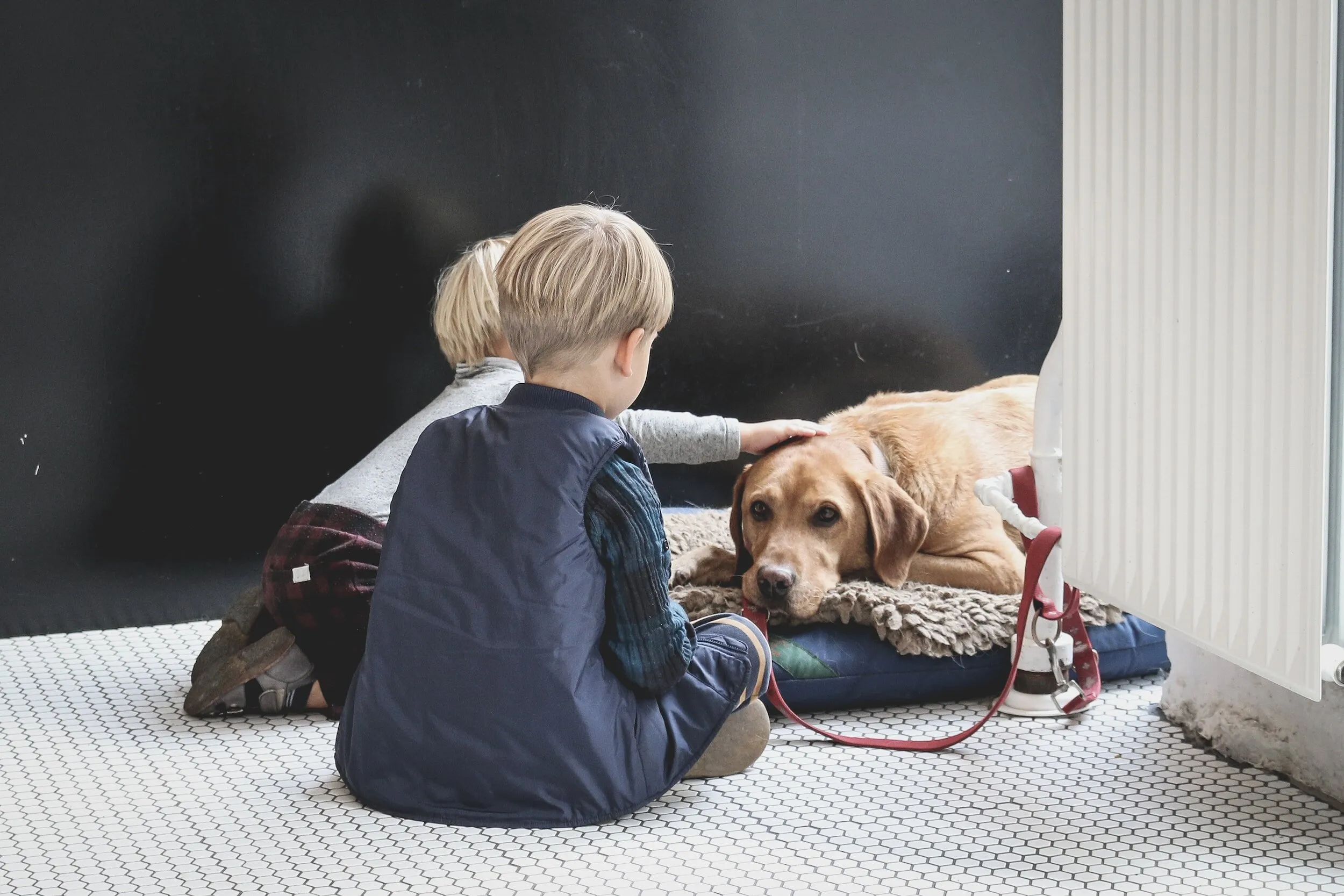
To help a child under 10 cope with pet loss, tell them the truth in simple words: their pet was very sick, their body stopped working and they died. Use the words “died” and “death” instead of “went to sleep” or “went away.” Then let them ask questions, share your own sadness and help them remember their pet.
Dr. Amanda Dolian provides in-home pet euthanasia in Frisco and nearby cities, and children are often at home for the visit. This guide covers what to say, whether your child should be there and how to help them grieve.
How to explain a pet’s death to a child
Death is hard for young children to understand. Explain it in words that fit their age, and make clear that their pet will not be with them anymore.
Phrases like “gone away” or “went to live somewhere else” confuse children. “Went to sleep” or “went to heaven” can too. If a child thinks the pet just left, they may wait for it to come back or think it was their fault.
Make sure they understand three things. Their pet has died. Death is permanent. Their pet will not come back.
Explain how sick their pet was
Tell them their pet was very sick, or that their pet’s body stopped working because they were so sick. Explain the difference between being a little sick and very sick. This keeps a child from fearing that they, or someone in the family, will die from a cold.
It also helps to explain that pets have shorter lives than people. Fifteen is young for a person but very old for a dog or cat.
Be as honest as you can. Honesty keeps confusion down, and it makes your child more likely to come to you with their feelings.
Should your child be there for the euthanasia?
That depends on your child, and it is your decision as the parent. Some children can handle being there and others can’t.
Before the visit, help your child understand that their pet is very sick, that their body has stopped working and that they won’t get better. Tell Dr. Dolian when you call or text if a child will be there, so she can prepare.
After the final injection, and after the pet has died, some pets have muscle movements or take a sudden deep breath. This can upset a child and may stay with them for a long time. That is why Dr. Dolian often suggests a middle path, below.
What Dr. Dolian tells children
“I generally explain that the euthanasia is a kind way for the pet to die peacefully, asleep and unaware. I also make sure the child understands that I am giving the pet a special medication that is never given to people.”
“If a child wants to be present, I will often suggest they stay while the pet falls asleep from the sedation, but not for the injection that stops the heart.”
Helping your child with their feelings
Grief is the deep sadness that comes from losing someone you love. Sadness, anger, confusion and even guilt are all normal for a child.
Ask what your child thinks death is, what they want to know and where they think their pet is now. Let their questions lead. Their answers can show you if something about the death frightens them, so you can help.
If they ask what happens after a pet dies, share your family’s beliefs. You can also say that no one truly knows. What matters most is being honest.
Reassure and listen
Tell your child their pet is not scared or hurting anymore and is at peace. Listen, and reflect their feelings back to them.
An adult who understands, and who tells them their feelings are normal, is a big comfort. Let them know you are sad too and will miss the pet as well.
Talk about the happy times you shared. Remembering them together can bring comfort.
Ways to honor your pet’s memory with your child
Making something together gives a child’s grief somewhere to go. Ideas that work for young children:
- Draw pictures or make a photo collage
- Help them write a letter to their pet, or a short eulogy
- Plant a tree or flowers in the yard
- Scatter the ashes in a place your pet loved
- Share a tribute on the pet memorials page or have a portrait of your pet made
Keep the memories close
Make a memory box for photos, the collar, toys and anything else that reminds your family of your pet. Looking through it later can bring back happy memories.
Healing takes time
Be patient with your child and with yourself. Parents want to take a child’s pain away fast, but it helps more to accept their feelings and give them time.
The pain does fade, and in time your family will remember your pet with a smile more than tears. If you are worried your child isn’t coping, a grief counselor can help. Dr. Dolian keeps a list of local pet loss counselors.
Make sure your child knows they are not alone. Sharing feelings, honoring your pet and keeping their memories close all help a family heal together.